
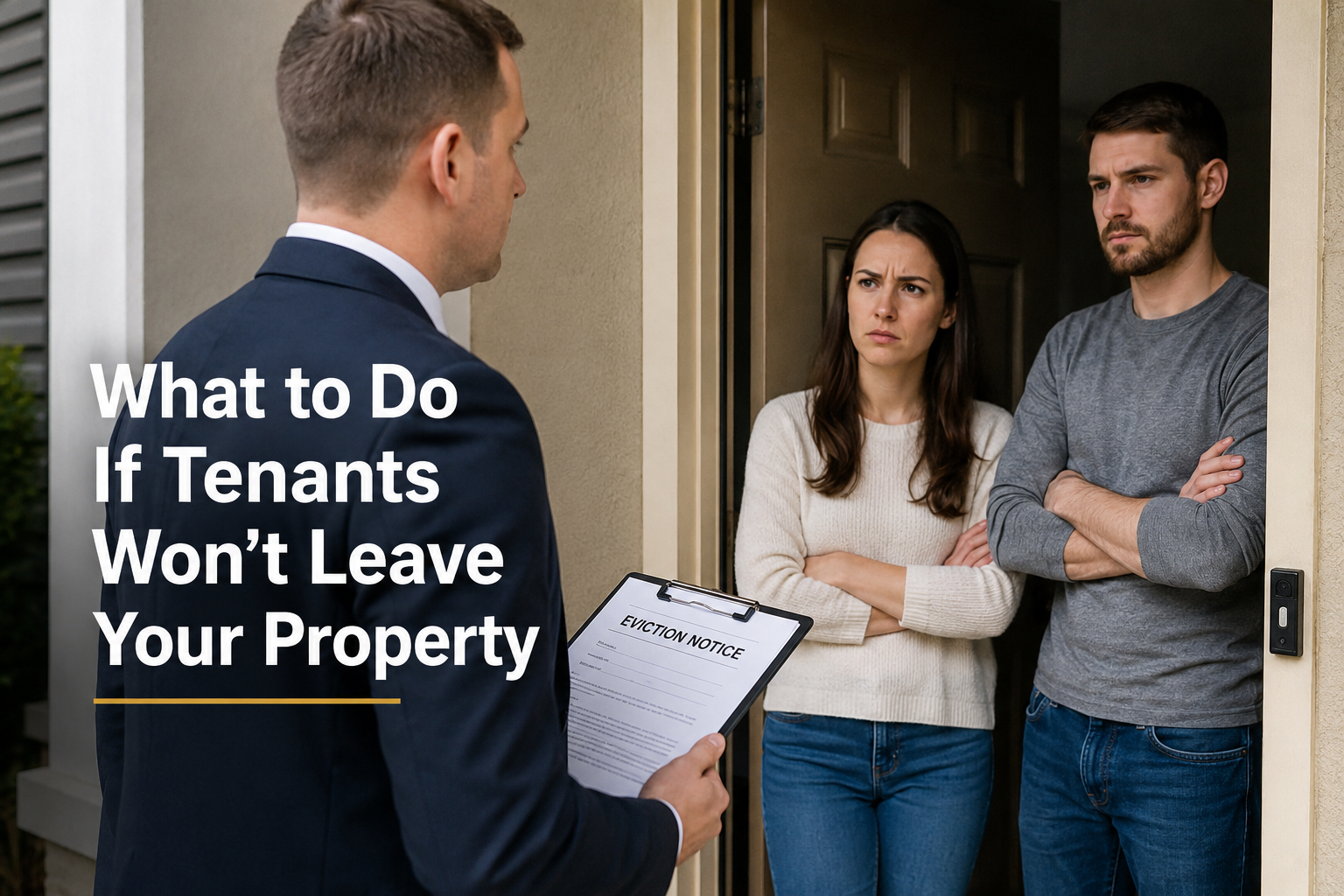
Your lease has ended and the tenant hasn’t left yet. You’ve tried to get them to leave but they refuse to leave your property. You’re not the only one in this situation, as many landlords experience a tenant refusing to vacate the rental property after they’ve been given notice. Dealing with a tenant who refuses to vacate is one of the most stressful situations a landlord will face. It’s frustrating, it’s draining and it can feel like you are powerless. Fortunately, there are options available to landlords and knowing the appropriate steps can greatly improve your chances of getting your property back and not losing your mind or your money.
Here in this blog, we give you proper information about what to Do If Tenants Won’t Leave Your Property. So, stay tuned with this blog.
Understand Why They’re Still There

Before firing the first shot in the legal battle, take a breath and get under their skin to know the reasons that make the tenant reluctant to vacate. The case may only be a case of misunderstanding. In other instances, they simply have no place to go, and they hope you will back off. In some cases, they are aware of the long eviction process, so it is a deliberate delay. Knowing of their reason does not really mean accepting it — still, it helps direct your next decision.
Step 1: Have a Direct Conversation
Begin with communicating with your tenants — contact them in a cordial and professional manner to alert them of their intended departure. As with any correspondence between landlords and tenants, ensure that all communication is documented in writing (using text messages, emails, or a formal letter). The documentation will provide a valuable record of events if anything were to escalate to complications between you and your tenant. Many times all that is necessary to resolve the situation is to give the tenant a simple yet stern reminder of what they agreed to do.
Step 2: Issue a Formal Written Notice
If you are unable to resolve the conversation with your tenant, then you should consider serving a formal written notice. This would typically be called a Notice to Vacate or a Notice to End Tenancy depending on what province or territory you live in.
A written notice (either Notice of Vacate or Notice to End Tenancy) should include:
- The tenant’s complete name;
- The address of the rental property.
- The reason for issuing the written notice, and
- The time at which the tenant must vacate the rental property.
You will need to provide the tenant with the written notice in accordance with your local laws – typically by hand delivery; through registered mail; etc. Any failure to follow the required procedure may result in delays to your application to commence legal proceedings against your tenant.
Step 3: File for Eviction Through the Proper Channels
To file an eviction order against a tenant who hasn’t vacated after the notice period, you’ll have to do so using your local landlord and tenant board/housing tribunal. In Manitoba, it is the Residential Tenancies Branch (RTB). Place the application with the necessary documents, and attend the hearing. Be prepared with all your notices, lease agreements, communications to the tenant, etc. and have them organized when you go to the hearing.
Step 4: Do Not Try to Force Them Out Yourself
It is also essential that you do not get so frustrated that you take illegal actions such as changing the locks or removing items from the premises, or turning off utilities , or trying to remove the tenant. These actions are known as Illegal Evictions and can cause you to face legal issues, even though the Resident is wrong. You must allow the Legal System to take its course.
Step 5: Enforce the Eviction Order
After receiving a legal eviction notice and the tenant not leaves, then you will need to enlist a sheriff or bailiff for the final & lawful authority needed to forcibly remove the tenant from your property. Not a pleasant option, but this is now your only alternative.
When the Whole Process Feels Like Too Much

No one ever said that evictions can be time-consuming, costly, and emotionally exhausting – but it’s true! Most landlords, after going through the filing process, the stress of not collecting rents, and the anxiety of legal action, reach a point where they simply want to get rid of the property altogether as quickly as possible. If you’re feeling like this, it may be worth considering selling your property even if you have a difficult tenant situation attached to it.
At I Buy Houses Winnipeg, we have helped numerous landlords in similar situations – no repairs necessary, no lengthy listings, and no waiting for someone to commit to buying your house. We will make you a cash offer so that you can move on with your life. In many cases, the best way to deal with an eviction is not to continue fighting your way through it – rather, we can provide you with a better way to move forward quickly.
FAQs
My tenant’s lease has ended but they’re still living there. What do I do first?
The easiest way to start getting your property back is to reach out directly via email or phone. Have a calm and clear discussion about when they intend to vacate your property since their lease will have expired. If there is no response and they continue to delay, then send them a formal written request in the form of a Notice to Vacate. This will constitute your first major step towards regaining possession of your property legally.
Can I just change the locks to get them out faster?
NO! You cannot change locks, remove belongings or cut off utilities without having legally evicted someone from a dwelling unit. Even if the tenant is at fault, doing any of these three things would be an illegal eviction and you may have to pay fines or be sued depending on what occurred. Please follow the correct legal procedure to remove tenants from your rental properties, even if this is frustrating.
How long does the eviction process usually take?
There is no one-way answer because it will depend on how the tenant responds to the eviction notice. If they are cooperative, the process will be completed in less than a month. If not, the eviction process may take several months or more, depending on how busy your local court system is at the time of filing. Therefore, you must act promptly and have your documentation in order.
What if the tenant says they have nowhere else to go?
This may be difficult on an emotional level, however, legally, their home cannot be your responsibility when they have vacated the property or breached their lease. There are ways to be compassionate to them while still moving forward with the appropriate legal proceedings. Consider giving them some money in exchange for moving quickly and voluntarily — known as “cash for keys” — this may save everyone a lot of time and stress.